Insect Bites are on the list of NHS Pharmacy First minor ailments that can be treated in community pharmacies. They include bee and wasp stings, and their symptoms including associated minor swelling and redness.
NHS Information for Patients
https://www.nhs.uk/conditions/insect-bites-and-stings
Insect bites or stings are not usually serious and get better in a few days. But sometimes they can become infected or can cause a serious allergic reaction.
Bites from some insects can also cause illness such as Lyme disease from ticks, scabies from mites, and malaria from mosquitoes in certain parts of the world.
Sometimes you might not have seen the insect that has bitten or stung you. And if you need to see a healthcare professional, remember to tell them if you have been on holiday or abroad
Check if it’s an insect bite or sting
The main symptoms of an insect bite or sting are:
- pain where you were bitten or stung
- a small, swelling or lump on the skin
The lump may look red. It may be more difficult to see on black or brown skin, but you should be able to feel it. If you are concerned then have a word with your pharmacist or dial NHS 111 or contact your doctors surgery.
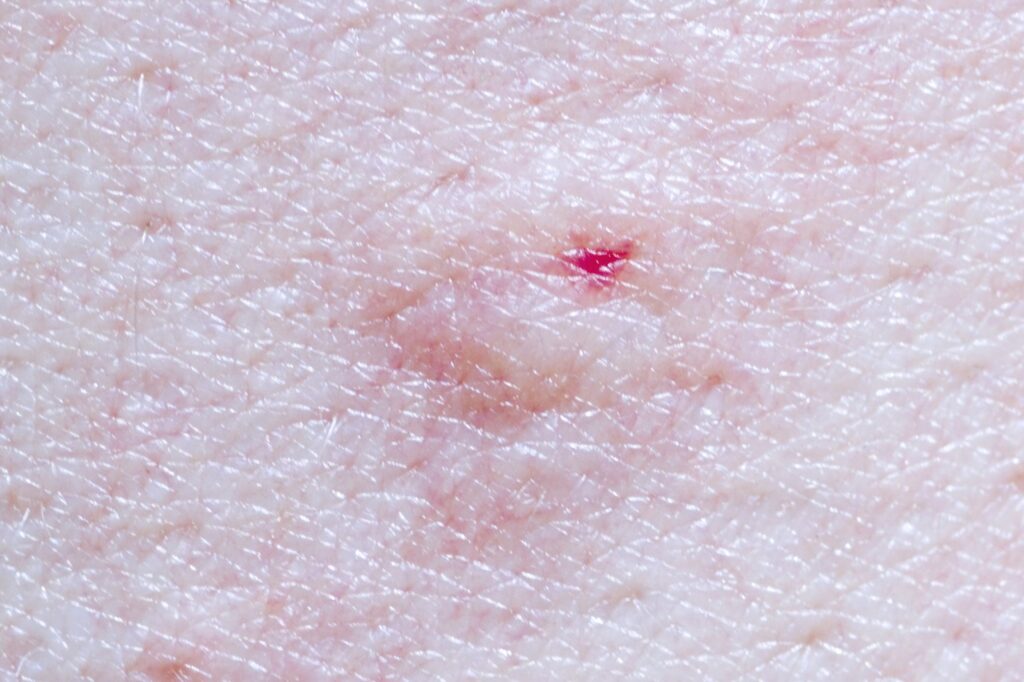
An uninfected bee sting (image from NHS.net)
Treating Uninfected Insect Bites & Stings
NHS Cornwall & Isles of Scilly have produced some very helpful guidance, “How to treat yourself at home and when to seek help”, including Horsefly and Tick bites. Follow this link….
Treating Infected Insect Bites & Stings
Sometimes a secondary infection can complicate the healing process. Patients in England can ask their pharmacist for advice on appropriate treatments, including if an antibiotic is necessary.
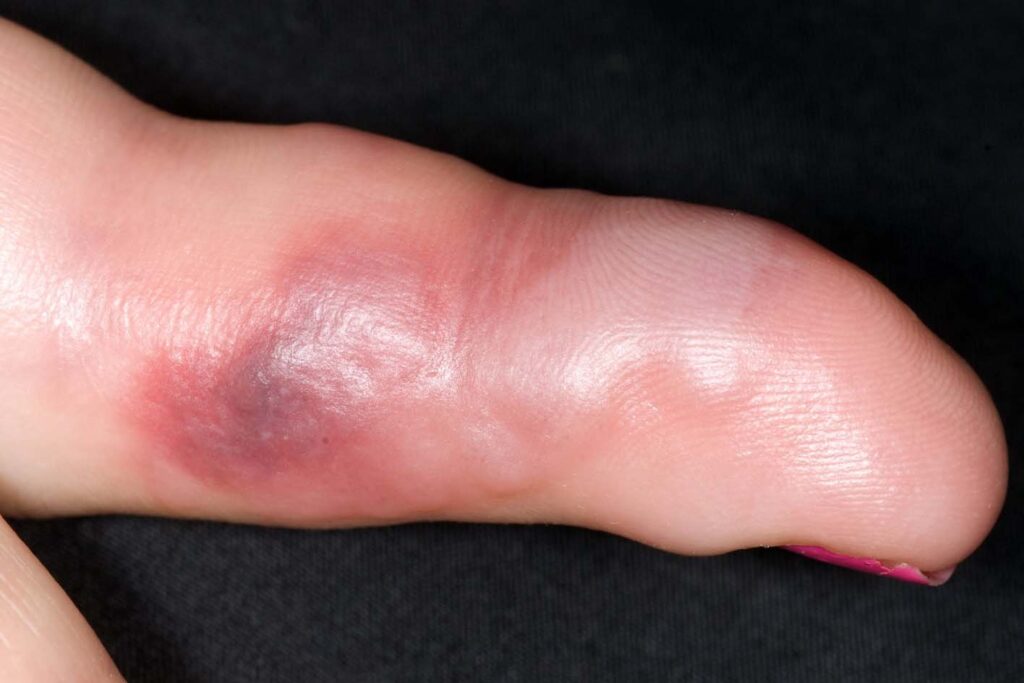
An infected Wasp Sting (image from NHS.net)
When to seek help.
If you have troublesome symptoms after an insect bite or sting, the following treatments may help as recommended in the above advice from NHS Cornwall & Isles of Scilly.
- for pain or discomfort: take over-the-counter painkillers, such as paracetamol or ibuprofen
- for itching: ask your pharmacist about suitable creams or antihistamine tablets
- for swelling: try regularly applying a cold compress or ice pack to the affected area, or ask your pharmacist about treatments such as antihistamine tablets
Use NHS 111 online or by phoning 111, or call your GP for advice if:
- your symptoms worsen or do not improve after a few days
- you’ve been stung or bitten in your mouth or throat, or near your eyes
- a large area (around 10cm or more patch of skin) around the bite becomes red and swollen or has pus
- you have symptoms of a more widespread infection, such as high temperature, swollen glands and other flu-like symptoms
Dial 999 without delay if you or someone else has symptoms of a severe reaction, such as:
- wheezing or trouble breathing
- a swollen face, mouth or throat
- feeling sick or being sick
- a fast heart rate
- feeling faint or dizzy
- difficulty swallowing
- loss of consciousness
Pharmacy Treatment Protocols
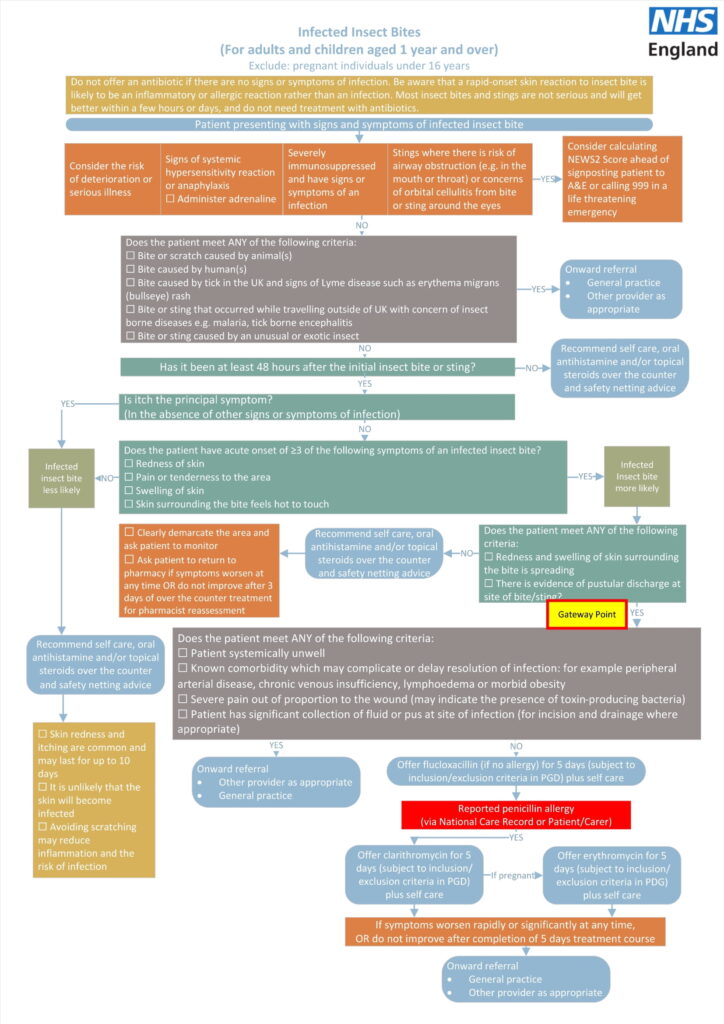
Pharmacist providers of NHS Pharmacy First services are required to follow NHS-approved treatment protocols when considering a possible infected insect bite or sting, which are summarised in this flowchart.